THEMIS efficacy


Efficacy in the THEMIS trial
In high-risk patients with CAD who had T2D and no history of MI or stroke
- Primary Efficacy End Point (Composite of CV Death, MI, or Stroke) BRILINTA 60 mg plus aspirin (N=9619) vs aspirin alone (N=9601):
- K-M% at 36 months, 6.9% vs 7.6%, respectively (HR 0.90; 95% CI 0.81-0.99; P=0.04)1
- Events per 1000 patient years: 24 vs 27, respectively2
- The composite end point was driven by MI and stroke2
- BRILINTA is not indicated to reduce CV death in patients with CAD2
IN A PRESPECIFIED SUBGROUP ANALYSIS OF THE THEMIS TRIAL,
Efficacy outcomes: Patients with a history of PCI
THEMIS-PCI primary efficacy end point: Composite of CV Death, MI, or Stroke3,4
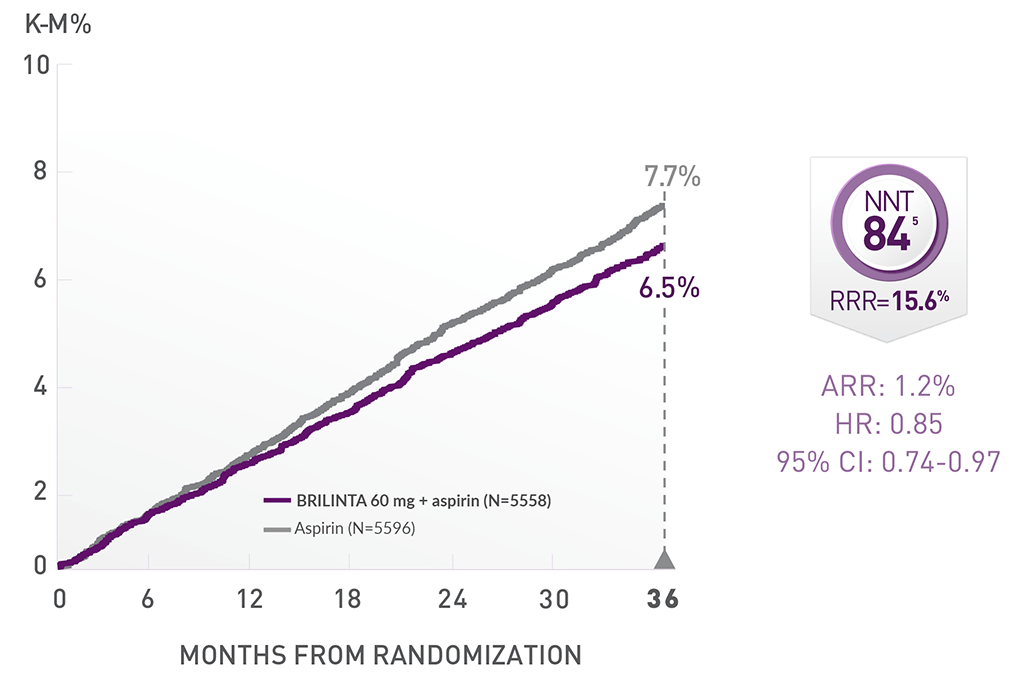
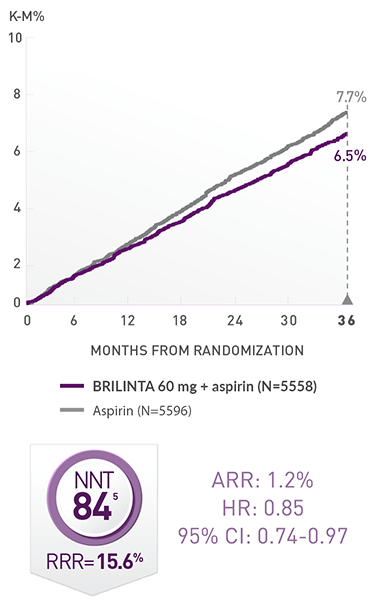
- In patients who did not have a history of PCI: composite of CV death, MI, or stroke (K-M%) at 36 months: 7.4% vs 7.5% with BRILINTA plus aspirin (N=4061) and aspirin alone (N=4005), respectively (HR 0.98; 95% CI 0.84–1.14)3,4
- BRILINTA is not indicated to reduce CV death in patients with CAD2
THEMIS was not designed or powered to demonstrate the efficacy or safety of BRILINTA compared with placebo in specific subgroups. Subgroup analyses were performed to evaluate consistency of results in different cohorts. Analyses must be interpreted cautiously, as differences can reflect the play of chance among a large number of analyses.

Do you have questions about the THEMIS study?
THEMIS STUDY DESIGN
THEMIS was a randomized, double-blind, placebo-controlled trial of ticagrelor vs placebo in 19,220 patients, on top of low-dose (75 to 150 mg) aspirin for the prevention of thrombotic CV events (CV death, MI, stroke). Patients ≥50 years with type 2 diabetes receiving an anti-hyperglycemic medication for at least 6 months, and with stable CAD (ie, history of PCI, CABG, or angiographic stenosis ≥50% in at least 1 coronary artery) were enrolled. Patients with known prior MI or stroke were excluded. Patients were treated for a median of 33 months and up to 58 months.1,2
ARR=absolute risk reduction; CABG=coronary artery bypass graft; CAD=coronary artery disease; CI=confidence interval; CV=cardiovascular; HR=hazard ratio; K-M=Kaplan-Meier; MI=myocardial infarction; NNT=number needed to treat; PCI=percutaneous coronary intervention; RRR=relative risk reduction; THEMIS=Effect of Ticagrelor on Health Outcomes in DiabEtes Mellitus Patients Intervention Study; T2D=type 2 diabetes.
References
- Steg PG, Bhatt DL, Simon T, et al; THEMIS Steering Committee and Investigators. Ticagrelor in patients with stable coronary disease and diabetes. N Engl J Med. 2019;381(14):1309-1320.
- BRILINTA® (ticagrelor) [package insert]. Wilmington, DE: AstraZeneca Pharmaceuticals LP; 2024.
- Bhatt DL, Steg PG, Mehta SR, et al; THEMIS Steering Committee and Investigators. Ticagrelor in patients with diabetes and stable coronary artery disease with a history of previous percutaneous coronary intervention (THEMIS-PCI): a phase 3, placebo-controlled, randomised trial. Lancet. 2019;394(10204):1169-1180.
- Steg PG, Bhatt DL, Simon T, et al. THEMIS-PCI: Ticagrelor added to aspirin in patients with diabetes and stable coronary artery disease with a history of prior percutaneous coronary intervention [presentation]. Presented at: European Society of Cardiology Congress; August 31-September 4, 2019; Paris, France.
- Data on File, REF-51076, AstraZeneca Pharmaceuticals LP.
BRILINTA was studied in more than 19,000 patients with CAD + T2D in themis1,2
The THEMIS trial was a Phase 3b, randomized, double-blind, placebo-controlled trial comparing BRILINTA 60 mg twice daily versus aspirin for the prevention of CV events in patients with coronary artery disease (CAD), who also had type 2 diabetes (T2D) and no history of MI or stroke, at high risk for such events (N=19,220). All patients received low-dose aspirin 75–150 mg once daily, unless contraindicated or not tolerated.1,2
The primary efficacy end point was composite of CV death, MI, or stroke. The primary safety end point was TIMI major bleeding. Median follow-up was 33 months and up to 58 months.1
Key inclusion criteria were CAD defined as a history of PCI/CABG or ≥50% lumen stenosis confirmed by angiography, age ≥50, and T2D (glucose-lowering medication for ≥6 months).1 Patients were excluded if they had a history of previous MI or stroke or planned revascularization.2
Select baseline characteristics

Median age: 66 years
Male sex: 68.6%
More than half (58%) of patients had PCI in the past (median time since most recent PCI: 3.3 years)2
CABG=coronary artery bypass graft; CAD=coronary artery disease; CV=cardiovascular; MI=myocardial infarction; PCI=percutaneous coronary intervention; THEMIS=Effect of Ticagrelor on Health Outcomes in DiabEtes Mellitus Patients Intervention Study; TIMI=Thrombolysis in Myocardial Infarction; T2D=type 2 diabetes.
References: 1. BRILINTA® (ticagrelor) [package insert]. Wilmington, DE: AstraZeneca Pharmaceuticals LP; 2024. 2. Steg PG, Bhatt DL, Simon T, et al; THEMIS Steering Committee and Investigators. Ticagrelor in patients with stable coronary disease and diabetes. N Engl J Med. 2019;381(14):1309-1320 and Supplementary Appendix.