


Dosing & administration
Dosing
Load
Initiation in ACS
LOADING DOSE OF BRILINTA 180 mg + ASPIRIN (USUALLY 325 mg)1
In PLATO, 46% of patients in both groups received clopidogrel in hospital prior to randomization. All patients randomized to BRILINTA received a loading dose of 180 mg.1,2

Two 90-mg tablets of BRILINTA
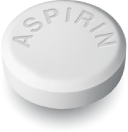
Initial loading dose of aspirin
(usually 325 mg)
6-12 HOURS: FIRST MAINTENANCE DOSE
Continuation in ACS
MAINTENANCE: BRILINTA 90 mg TWICE DAILY + LOW-DOSE ASPIRIN ONCE DAILY1

One 90-mg tablet of BRILINTA twice daily
81 mg of aspirin once daily
IN PATIENTS WHO HAVE UNDERGONE PCI
CONSIDER SINGLE ANTIPLATELET THERAPY WITH BRILINTA
Based on the evolving risk for thrombotic vs bleeding events
Tablet images are not actual size.

Want to help your patients get started on BRILINTA?
INITIATE AND CONTINUE TO TREAT
In patients with prior MI, 1 year after an ACS event
BRILINTA 60 mg TWICE DAILY + LOW-DOSE ASPIRIN ONCE DAILY1

One 60-mg tablet of BRILINTA twice daily
81 mg of aspirin once daily
IN PATIENTS WHO HAVE UNDERGONE PCI
CONSIDER SINGLE ANTIPLATELET THERAPY WITH BRILINTA
Based on the evolving risk for thrombotic vs bleeding events
In PEGASUS, patients could be randomized regardless of their prior adenosine diphosphate receptor blocker therapy or a lapse in therapy.1
Tablet images are not actual size.
Want to help your patients get started on BRILINTA?
INITIATE AND CONTINUE TO TREAT
In high-risk patients with CAD, without history of MI or stroke
BRILINTA 60 mg TWICE DAILY + LOW-DOSE ASPIRIN ONCE DAILY1
One 60-mg tablet of BRILINTA twice daily
81 mg of aspirin once daily (generally)
Tablet images are not actual size.
Want to help your patients get started on BRILINTA?
INITIATE
CONTINUE
In patients with acute ischemic stroke or high-risk TIA
LOADING DOSE OF BRILINTA 180 mg + ASPIRIN (300 mg-325 mg)1
Two 90-mg tablets of BRILINTA
Initial loading dose of aspirin
(300 mg-325 mg)
CONTINUE
BRILINTA 90 mg TWICE DAILY + LOW-DOSE ASPIRIN ONCE DAILY1
One 90-mg tablet of BRILINTA twice daily
81 mg of aspirin once daily
Continue with 90 mg twice daily for up to 30 days.
Tablet images are not actual size.
Want to help your patients get started on BRILINTA?
Administration
FOR PATIENTS UNABLE TO SWALLOW THE TABLET(S) WHOLE


Crushed tablet(s), mixed with water NG TUBE (CH8 OR GREATER)
NG=nasogastric.
- Do not administer BRILINTA with another oral P2Y12 platelet inhibitor1
- Avoid aspirin at doses higher than recommended1
- A patient who misses a dose of BRILINTA should take one tablet (the next dose) at its scheduled time1

BRILINTA is metabolized by the liver, and impaired hepatic function can increase risks for bleeding and other adverse events. Avoid use of BRILINTA in patients with severe hepatic impairment. There is limited experience with BRILINTA in patients with moderate hepatic impairment; consider risks and benefits of treatment. No dosage adjustment is needed in patients with mild hepatic impairment.1
- No dosage adjustment is needed in patients with renal impairment. PLATO, PEGASUS, THEMIS, and THALES did not study patients receiving dialysis1
- Breastfeeding is not recommended1
Administration with other drugs
In PLATO, BRILINTA could have been coadministered with proton pump inhibitors (such as omeprazole), lipid-lowering agents, beta blockers, ACEIs, ARBs, unfractionated heparin, low-molecular-weight heparin, and GP IIb/IIIa inhibitors.2
Drug Interactions1
DRUGS
RECOMMENDATIONS AND/OR IMPACT
Strong CYP3A inhibitors
Avoid use of strong inhibitors of CYP3A (eg, ketoconazole, itraconazole, voriconazole, clarithromycin, nefazodone, ritonavir, saquinavir, nelfinavir, indinavir, atazanavir, and telithromycin). BRILINTA is metabolized by CYP3A4/5. Strong inhibitors substantially increase ticagrelor exposure and so increase the risk of adverse events.
Strong CYP3A inducers
Avoid use with strong inducers of CYP3A (eg, rifampin, phenytoin, carbamazepine, and phenobarbital). BRILINTA is metabolized by CYP3A4/5. Strong inducers substantially reduce ticagrelor exposure and so decrease the efficacy of ticagrelor.
Opioids
As with other oral P2Y12 inhibitors, co-administration of opioid agonists delays and reduces the absorption of ticagrelor. Consider use of a parenteral anti-platelet in ACS patients requiring co-administration.
Simvastatin and lovastatin
Avoid simvastatin and lovastatin doses greater than 40 mg. BRILINTA increases serum concentrations of simvastatin and lovastatin because these drugs are metabolized by CYP3A4.
Rosuvastatin
BRILINTA is a breast cancer resistance protein [BCRP] inhibitor. Rosuvastatin plasma concentrations may increase because rosuvastatin is a BCRP substrate. Monitor for statin-related adverse events.
Digoxin
BRILINTA inhibits the P-glycoprotein transporter; monitor digoxin levels with initiation of or change in BRILINTA therapy.
Want to help your patients get started on BRILINTA?
EXPLORE MORE
PLATO STUDY DESIGN
PLATO was a randomized, international, double-blind, controlled comparative study in patients with ACS hospitalized with or without ST-segment elevation, with an onset of symptoms within 24 hours (N=18,624). The study compared BRILINTA (180-mg loading dose, 90 mg twice daily thereafter) to clopidogrel (300-mg to 600-mg loading dose, 75 mg daily thereafter) for the prevention of thrombotic CV events (CV death, MI, or stroke). Study period was 12 months, with median duration of therapy of 277 days. BRILINTA and clopidogrel were studied with aspirin and other standard therapies.1,2
PEGASUS STUDY DESIGN
PEGASUS-TIMI 54 compared BRILINTA (90 mg twice daily or 60 mg twice daily) vs placebo, each given with low-dose aspirin (75 to 150 mg), for the prevention of thrombotic CV events (CV death, MI, or stroke) in 21,162 patients ≥50 years of age with a history of MI (1 to 3 years prior to randomization). Patients also had at least 1 risk factor for thrombotic CV events (age ≥65 years, diabetes mellitus requiring medication, at least 1 other prior MI, evidence of multivessel coronary artery disease, or creatinine clearance <60 mL/min). Only the 60-mg dose strength is approved for use in patients with a history of MI 1 year after an ACS event. Patients were treated for at least 12 months and up to 48 months with a median follow-up time of 33 months.1,4
THEMIS STUDY DESIGN
THEMIS was a randomized, double-blind, placebo-controlled trial of ticagrelor vs placebo in 19,220 patients, on top of low-dose (75 to 150 mg) aspirin for the prevention of thrombotic CV events (CV death, MI, stroke). Patients ≥50 years with type 2 diabetes receiving an anti-hyperglycemic medication for at least 6 months, and with stable CAD (ie, history of PCI, CABG, or angiographic stenosis ≥50% in at least 1 coronary artery) were enrolled. Patients with known prior MI or stroke were excluded. Patients were treated for a median of 33 months and up to 58 months.1,5
THALES STUDY DESIGN
THALES was a randomized, international, double-blind, placebo-controlled, multicenter study to investigate dual antiplatelet therapy with BRILINTA (180-mg loading dose, 90 mg twice daily thereafter) and aspirin vs placebo and aspirin in the prevention of stroke or death in patients with acute ischemic stroke or transient ischemic attack (N=11,016). The primary end point was the first occurrence of the composite of stroke or death at 30 days. In both arms, patients received a loading dose of aspirin 300-325 mg followed by aspirin 75-100 mg once daily. Patients were ≥40 years of age, had mild-to-moderate acute noncardioembolic ischemic stroke (NIHSS score ≤5), or high-risk TIA (ABCD2 score ≥6 or symptomatic intracranial or extracranial arterial stenosis [≥50% narrowing in the diameter of the lumen of an artery that could account for the TIA]). Patients were randomized within 24 hours and treated for a median of 31 days.1,6
ABCD2=Age, Blood pressure, Clinical features, Duration of TIA, and Diabetes mellitus; ACEI=angiotensin-converting enzyme inhibitor; ACS=acute coronary syndrome; ARB=angiotensin receptor blocker; CABG=coronary artery bypass graft; CAD=coronary artery disease; CV=cardiovascular; GP=glycoprotein; MI=myocardial infarction; NIHSS=National Institutes of Health Stroke Scale; PCI=percutaneous coronary intervention; PEGASUS=Prevention of Cardiovascular Events in Patients With Prior Heart Attack Using Ticagrelor Compared to Placebo on a Background of Aspirin; PLATO=PLATelet inhibition and patient Outcomes; THALES=Acute STroke or Transient IscHemic Attack Treated with TicAgreLor and Aspirin for PrEvention of Stroke and Death; THEMIS=Effect of Ticagrelor on Health Outcomes in DiabEtes Mellitus Patients Intervention Study; TIA=transient ischemic attack; TIMI=Thrombolysis in Myocardial Infarction; T2D=type 2 diabetes.
References
- BRILINTA® (ticagrelor) [package insert]. Wilmington, DE: AstraZeneca Pharmaceuticals LP; 2024.
- Wallentin L, Becker RC, Budaj A, et al; PLATO Investigators. Ticagrelor versus clopidogrel in patients with acute coronary syndromes. N Engl J Med. 2009;361(11):1045-1057 and Supplementary Appendix.
- Data on File, REF-5061, AstraZeneca Pharmaceuticals LP.
- Bonaca MP, Bhatt DL, Cohen M, et al; PEGASUS-TIMI 54 Steering Committee and Investigators. Long-term use of ticagrelor in patients with prior myocardial infarction. N Engl J Med. 2015;372(19):1791-1800.
- Steg PG, Bhatt DL, Simon T, et al; THEMIS Steering Committee and Investigators. Ticagrelor in patients with stable coronary disease and diabetes. N Engl J Med. 2019;381(14):1309-1320.
- Johnston SC, Amarenco P, Denison H, et al; THALES Investigators. Ticagrelor and aspirin or aspirin alone in acute ischemic stroke or TIA. N Engl J Med. 2020;383(3):207-217 and Supplementary Appendix.