PLATO select analyses and subgroups


In patients with ACS, Risk won’t quit.
Neither will BRILINTA.
Prespecified landmark analysis of PLATO—Thrombotic CV events over time1
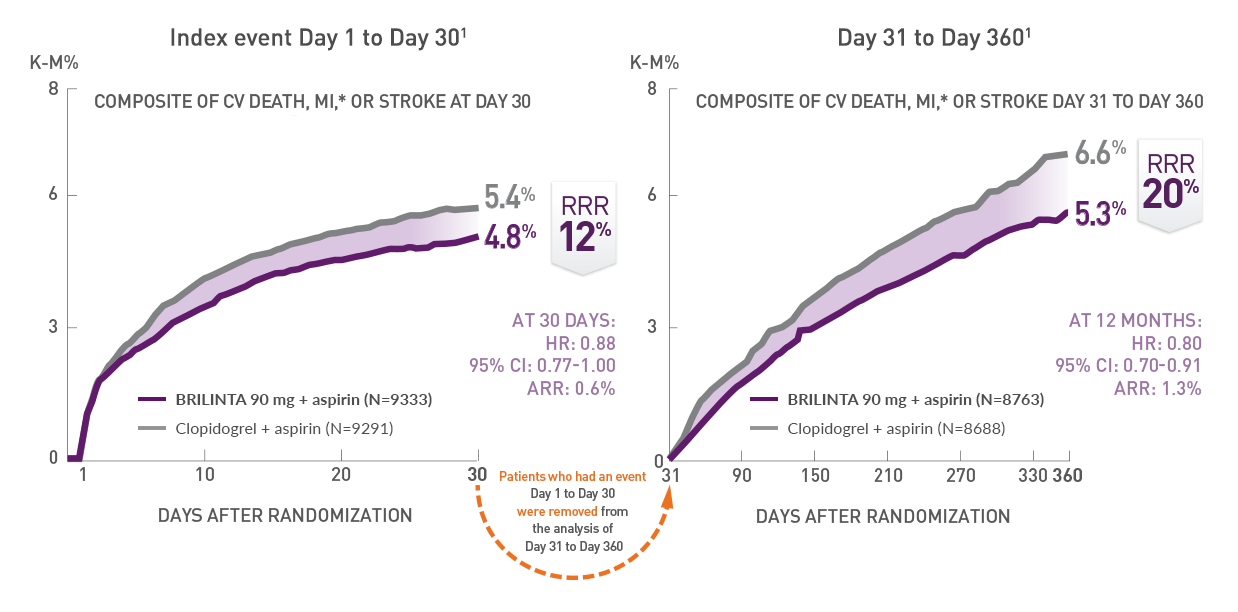

More than half of the ARR with BRILINTA 90 mg plus aspirin was seen after the first 30 days1
*Excluding silent MI.
- Patients were randomized to either BRILINTA or clopidogrel, and the occurrence of the primary composite end point was evaluated from Day 1-30 and Day 31-360. Patients who did not experience an event in the first 30 days continued on their original treatment and were included in the analysis from Day 31-360. This analysis did not evaluate a switch in treatment.1
Keep your patients on BRILINTA

Do you have questions about the PLATO study?

PLATO: Net benefit analysis2,3
Prespecified PLATO secondary end point
Composite of all-cause mortality (including fatal bleeding and CV death), MI,* and stroke at 12 months
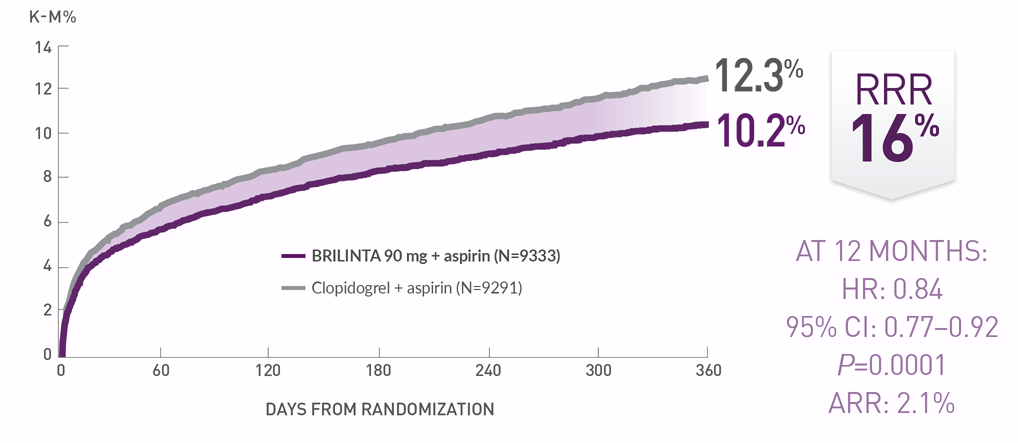
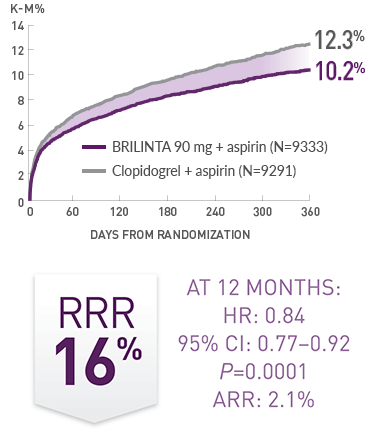
*Excluding silent MI.
Why choose second best?
Make SUPERIORITY with BRILINTA your choice
Do you have questions about the PLATO study?

Why choose second best?
Make SUPERIORITY with BRILINTA your choice
Do you have questions about the PLATO study?
In PLATO patients with ACS, NSTEMI subgroup: BRILINTA vs clopidogrel
Primary end point in the PLATO final diagnosis NSTEMI prespecified subgroup at 12 months
Composite of CV death, MI,* or stroke1,3
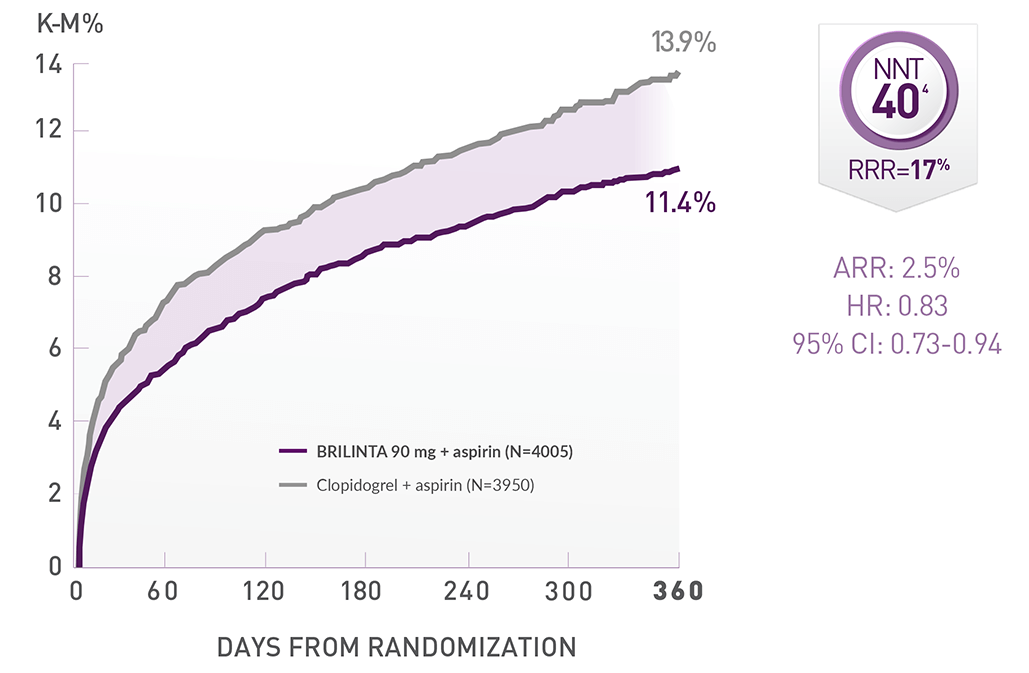
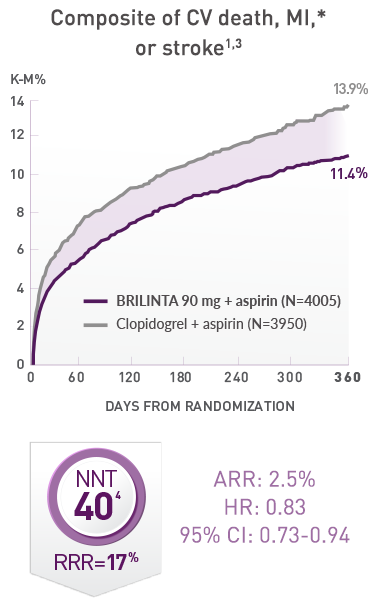
*Excluding silent MI.
NNT=number needed to treat and is calculated as 1/ARR.
Additional final diagnosis subgroups
Composite efficacy end point K-M% at 12 months1
- BRILINTA 90 mg plus aspirin vs clopidogrel plus aspirin, respectively:
- STEMI 8.5% (N=3496) vs 10.1% (N=3530), HR: 0.84; 95% CI: 0.72–0.98
- UA 8.6% (N=1549) vs 9.1% (N=1563), HR: 0.96; 95% CI: 0.75–1.22
PLATO was not designed or powered to demonstrate the efficacy or safety of BRILINTA compared with clopidogrel in specific subgroups. Subgroup analyses were performed to evaluate consistency of results in different cohorts. Analyses must be interpreted cautiously, as differences can reflect the play of chance among a large number of analyses. The final diagnosis subgroup was based on post-randomized determinations.3
Do you have questions about the PLATO study?
CKD (CrCl <60 mL/min): BRILINTA vs clopidogrel in PLATO
A post hoc analysis of CV events in the PLATO CKD subgroup at 12 months5
Composite of CV death, MI,* or stroke5
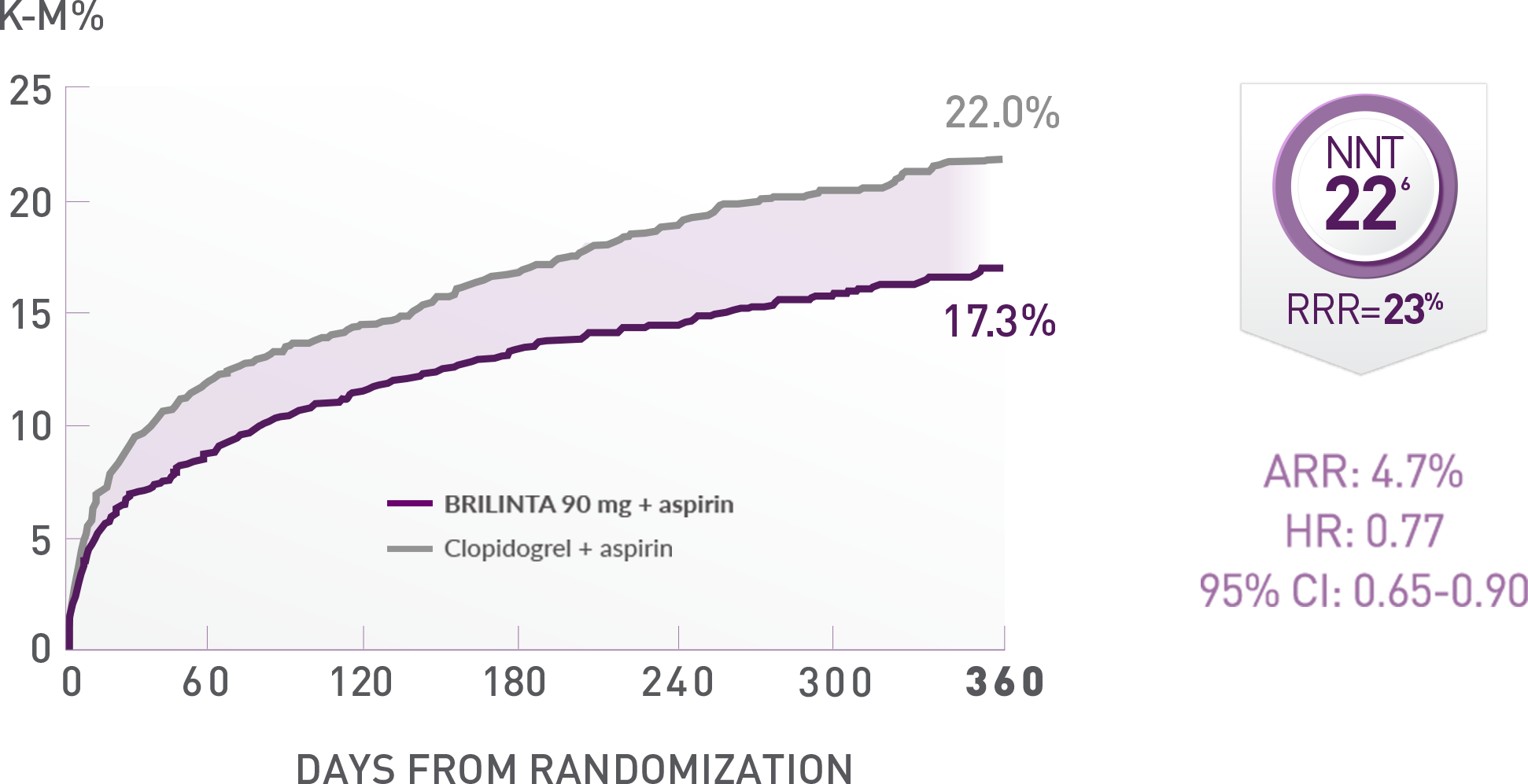
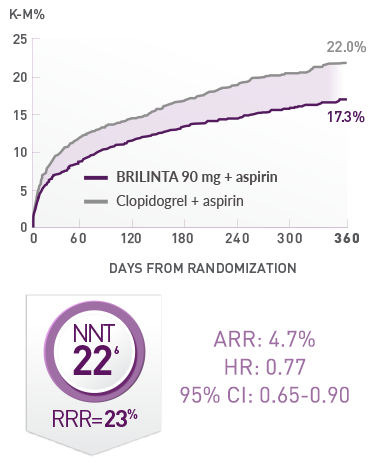
*Excluding silent MI.
NNT=number needed to treat and is calculated as 1/ARR.
- Central laboratory serum creatinine levels were available in 15,202 (81.9%) PLATO patients at baseline, and creatinine clearance, estimated by the Cockcroft-Gault equation, was calculated in a post hoc analysis of the subgroup5
- CKD was defined as creatinine clearance <60 mL/min (n=3237).5 PLATO excluded patients requiring dialysis7
- No dosage adjustment is needed in patients with renal impairment7
In PLATO non-CKD (CrCl ≥60 mL/min) patients
- A post hoc analysis of the primary efficacy end point in the non-CKD subgroup (n=11,965), K-M% at 12 months: 7.9% vs 8.9% with BRILINTA and clopidogrel, respectively (HR 0.90; 95% CI 0.79–1.02)5
PLATO was not designed or powered to demonstrate the efficacy or safety of BRILINTA compared with clopidogrel in specific subgroups. Subgroup analyses were performed to evaluate consistency of results in different cohorts. Analyses must be interpreted cautiously, as differences can reflect the play of chance among a large number of analyses.3
Do you have questions about the PLATO study?
PLATO STUDY DESIGN
PLATO was a randomized, international, double-blind, controlled comparative study in patients with ACS hospitalized with or without ST-segment elevation, with an onset of symptoms within 24 hours (N=18,624). The study compared BRILINTA (180-mg loading dose, 90 mg twice daily thereafter) to clopidogrel (300-mg to 600-mg loading dose, 75 mg daily thereafter) for the prevention of thrombotic CV events (CV death, MI, or stroke). Study period was 12 months, with median duration of therapy of 277 days. BRILINTA and clopidogrel were studied with aspirin and other standard therapies.3,7
ACS=acute coronary syndrome; ARR=absolute risk reduction; CI=confidence interval; CKD=chronic kidney disease; CrCl=creatinine clearance; CV=cardiovascular; HR=hazard ratio; K-M=Kaplan-Meier; MI=myocardial infarction; NSTEMI=non–ST-elevation myocardial infarction; PLATO=PLATelet inhibition and patient Outcomes; RRR=relative risk reduction; STEMI=ST-elevation myocardial infarction; UA=unstable angina.
References
- US Food and Drug Administration; Center for Drug Evaluation and Research; Division of Cardiovascular and Renal Products. Complete Response Review Addendum. Reviewed June 8, 2011. Accessed April 25, 2024. https://www.accessdata.fda.gov/drugsatfda_docs/nda/2011/022433orig1s000medr.pdf
- Data on File, REF-51077, AstraZeneca Pharmaceuticals LP.
- Wallentin L, Becker RC, Budaj A, et al; PLATO Investigators. Ticagrelor versus clopidogrel in patients with acute coronary syndromes. N Engl J Med. 2009;361(11):1045-1057 and Supplementary Appendix.
- Data on File, REF-72872, AstraZeneca Pharmaceuticals LP.
- James S, Budaj A, Aylward P, et al. Ticagrelor versus clopidogrel in acute coronary syndromes in relation to renal function: results from the Platelet Inhibition and Patient Outcomes (PLATO) trial. Circulation. 2010;122(11):1056-1067.
- Data on File, REF-51076, AstraZeneca Pharmaceuticals LP.
- BRILINTA® (ticagrelor) [package insert]. Wilmington, DE: AstraZeneca Pharmaceuticals LP; 2024.
BRILINTA was studied in more than 18,000 patients with ACS in PLATO1,2
BRILINTA 90 mg plus aspirin was studied vs clopidogrel plus aspirin in more than 18,000 patients, including STEMI (ST-elevation myocardial infarction), NSTEMI (non–ST-elevation myocardial infarction), and UA (unstable angina) patients, across 43 countries and 862 sites in the PLATO (PLATelet inhibition and patient Outcomes) study.1
Patients were treated for at least 6 months and up to 12 months. Patients were excluded if they had a previous intracranial hemorrhage, had gastrointestinal bleeding within 6 months, had a known bleeding diathesis or coagulation disorder, or required treatment with anticoagulants. BRILINTA and clopidogrel were studied with aspirin and other standard therapies.2
PLATO was designed to mirror real-world clinical practice across ACS diagnoses and medical or invasive treatment approaches.3
PLATO included both medical and invasive (PCI or CABG) treatment approaches. Patients who received fibrinolytic therapy within the previous 24 hours or who had a need for chronic oral anticoagulation therapy were excluded.2
ACS=acute coronary syndrome; CABG=coronary artery bypass graft; PCI=percutaneous coronary intervention; PLATO=PLATelet inhibition and patient Outcomes.
References: 1. Wallentin L, Becker RC, Budaj A, et al; PLATO Investigators. Ticagrelor versus clopidogrel in patients with acute coronary syndromes. N Engl J Med. 2009;361(11):1045-1057 and Supplementary Appendix. 2. BRILINTA® (ticagrelor) [package insert]. Wilmington, DE: AstraZeneca Pharmaceuticals LP; 2024. 3. James S, Åkerblom A, Cannon CP, et al. Comparison of ticagrelor, the first reversible oral P2Y12 receptor antagonist, with clopidogrel in patients with acute coronary syndromes: rationale, design, and baseline characteristics of the PLATelet inhibition and patient Outcomes (PLATO) trial. Am Heart J. 2009;157(4):599-605.