PLATO & PEGASUS efficacy
#1 Prescribed OAP for STEMI PCI1
PLATO & PEGASUS efficacy


SUPERIORITY saves lives: BRILINTA SIGNIFICANTLY REDUCED CV DEATH vs clopidogrel at 12 months in patients with ACS2,3
PLATO secondary efficacy end point
CV death at 12 months2,3*
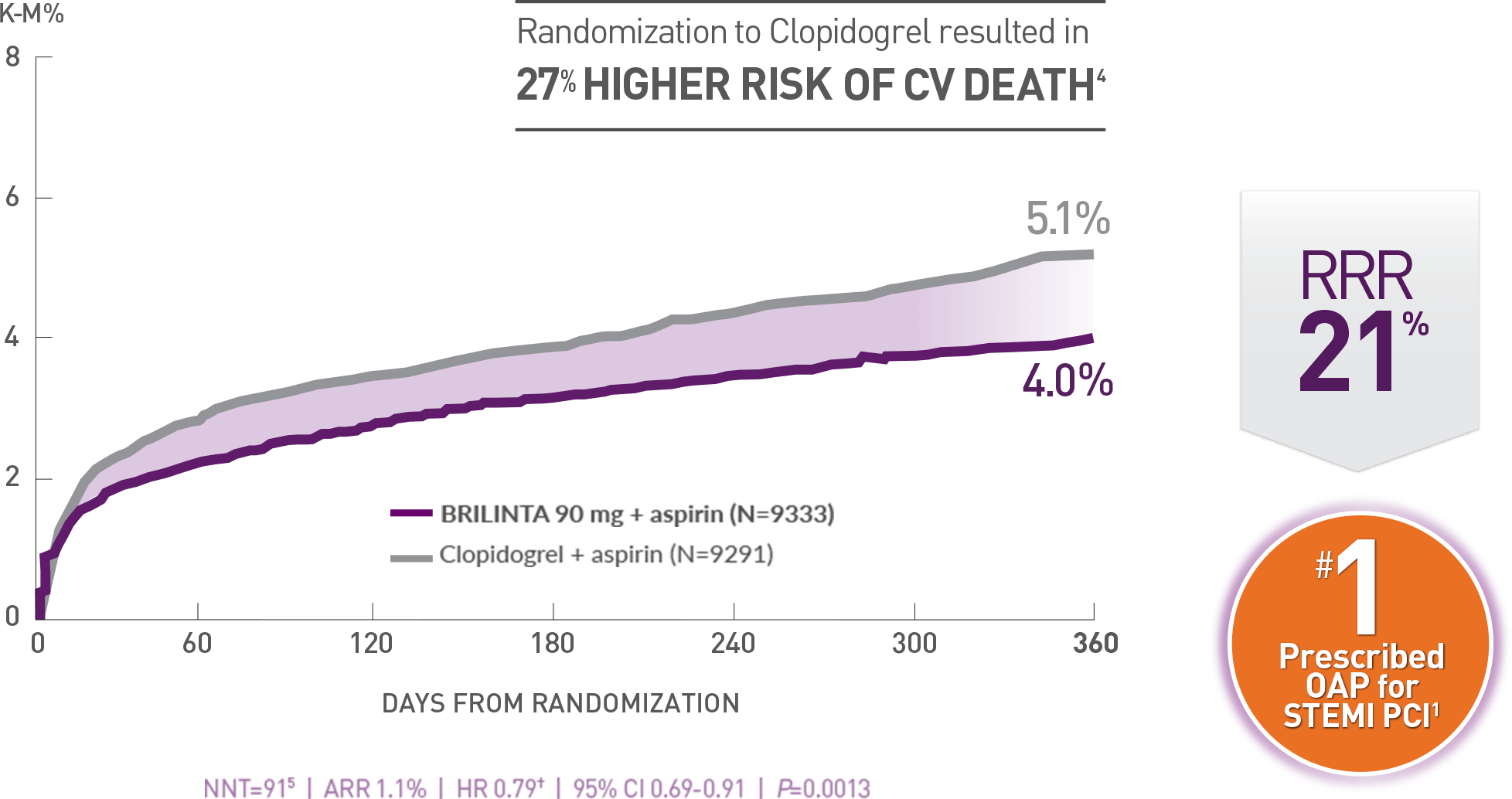
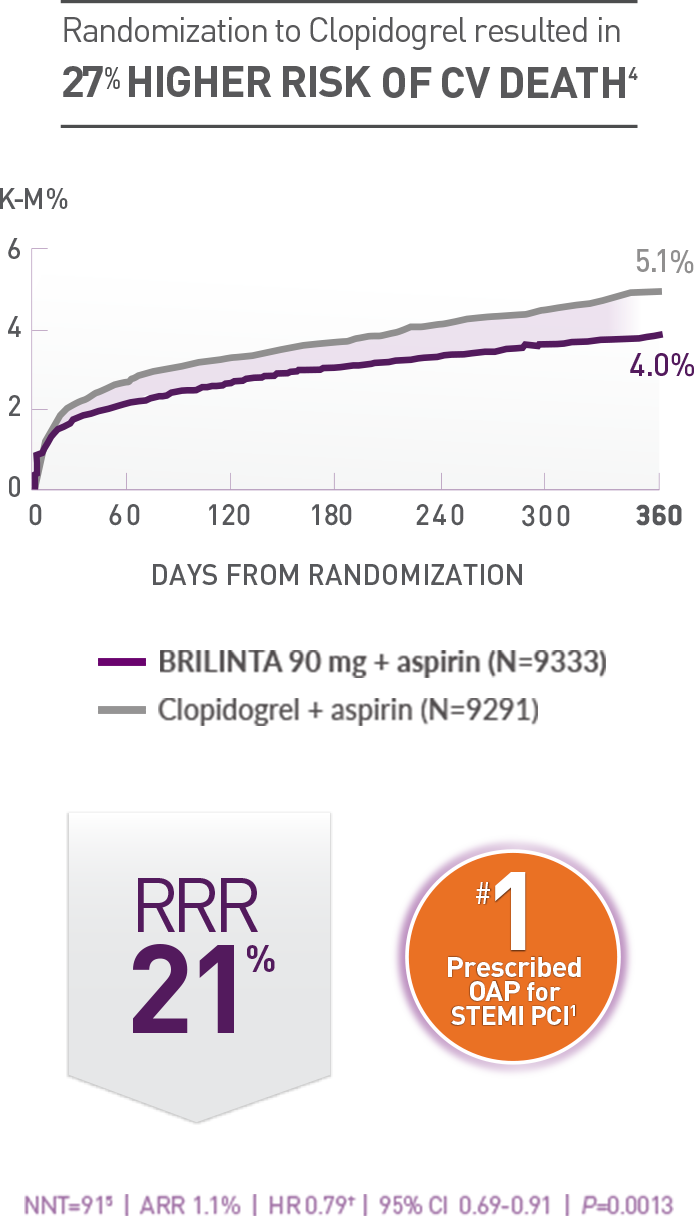
*K-M rate is the rate of first events only.
†Hazard ratio derived from a Cox proportional-hazards model on data from the primary and secondary end points.3
NNT=number needed to treat and is calculated as 1/ARR.
Relative risk increase is calculated by inverting the HR for CV death at 12 months (0.79), subtracting 1 from that number, and multiplying by 100.
- Secondary efficacy end point of CV death at 12 months for BRILINTA plus aspirin vs clopidogrel plus aspirin: Events per 1000 patient years: 45 vs 57, respectively
Why choose second best?
SAVE MORE LIVES with BRILINTA

Do you have questions about the PLATO study?

Additional PLATO secondary efficacy end points2,3
Patients with outcome events (events/1000 patient years)
Patients with outcome events (events/1000 patient years)
MIǂ§
Stroke§
All-cause mortality
BRILINTA 90 mg + aspirin (N=9333)
MIǂ§65
Stroke§16
All-cause mortality51
Clopidogrel + aspirin (N=9291)
MIǂ§76
Stroke§14
All-cause mortality65
Outcomes at 12 months (K-M%)
Outcomes at 12 months (K-M%)
MIǂ§
Stroke§
All-cause mortality
BRILINTA 90 mg + aspirin (N=9333)
MIǂ§5.8
Stroke§1.5
All-cause mortality4.5
Clopidogrel + aspirin (N=9291)
MIǂ§6.9
Stroke§1.3
All-cause mortality5.9
HR (95% CI)†
MIǂ§0.84 (0.75–0.95)
Stroke§1.17 (0.91–1.52)
All-cause mortality0.78 (0.69–0.89)
P-value
MIǂ§0.0045
Stroke§0.22
All-cause mortality0.0003ǁ
†Hazard ratio derived from a Cox proportional-hazards model on data from the primary and secondary end points.3
‡Excluding silent MI.
§Including patients who could have had other nonfatal events or died.
||Due to the hierarchical test sequence in PLATO, all-cause mortality was an exploratory analysis and, therefore, the P-value is nominal.3
Do you have questions about the PLATO study?
Treat patients with ACS, not just the stent. SUPERIOR CV EVENT REDUCTION with BRILINTA vs clopidogrel at 12 months2,3
PLATO primary efficacy end point
Composite of CV death, MI,* or stroke at 12 months2,3
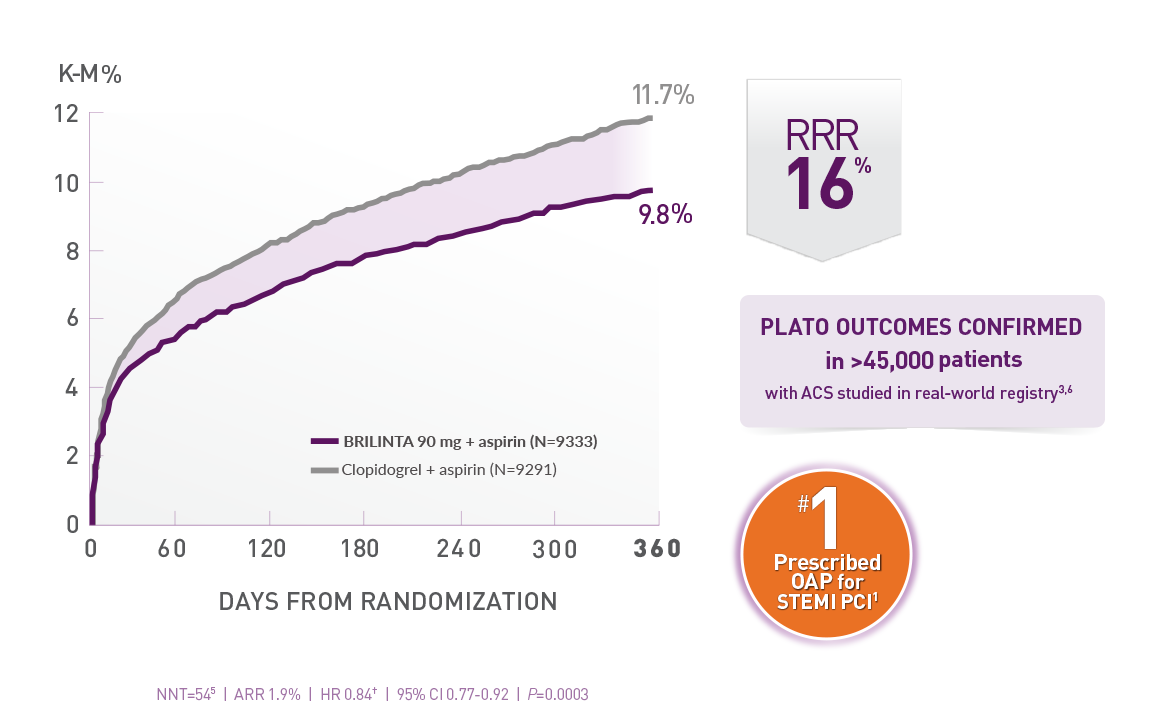
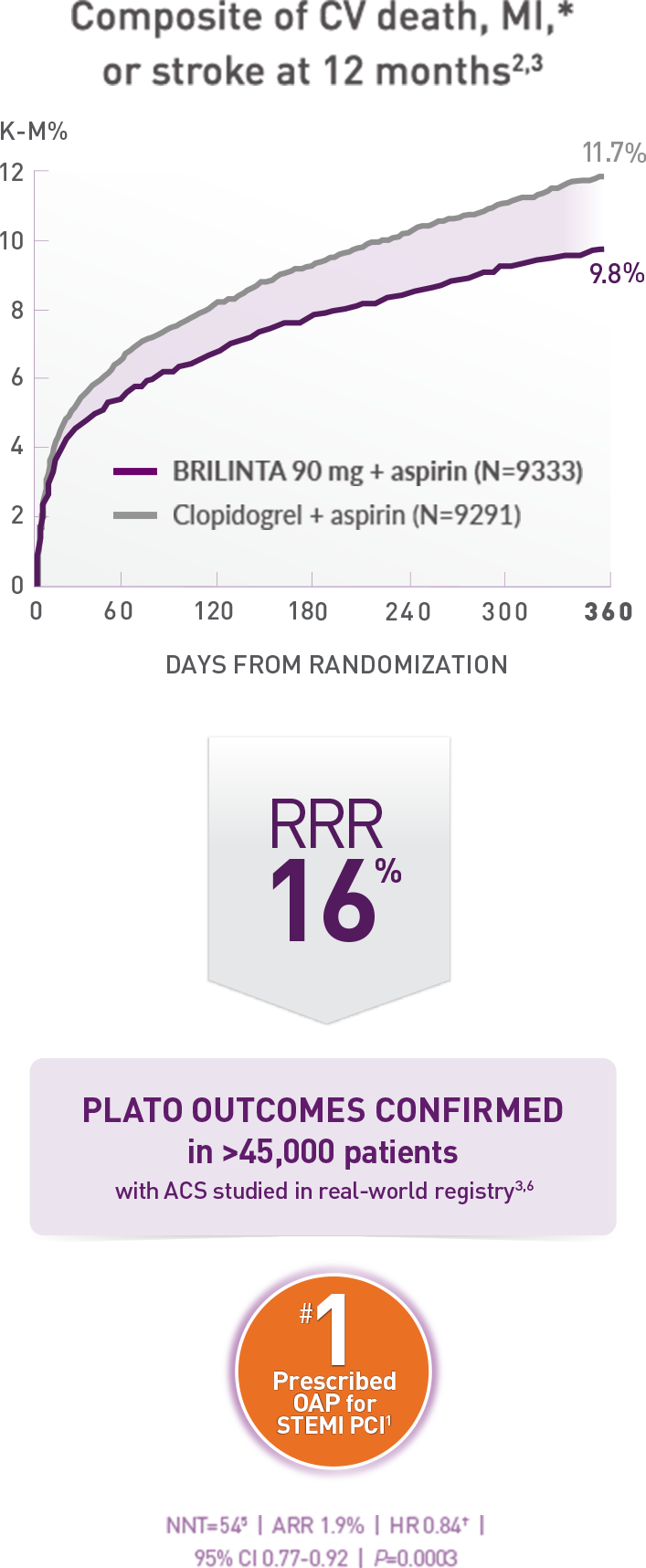
PLATO OUTCOMES CONFIRMED in >45,000 patients
with ACS studied in real-world registry2,5
*Excluding silent MI.
†Hazard ratio derived from a Cox proportional-hazards model on data from the primary and secondary end points.3
NNT=number needed to treat and is calculated as 1/ARR.
- Events per 1000 patient years for BRILINTA vs clopidogrel: 111 vs 131, respectively
- BRILINTA and clopidogrel were studied with aspirin and other standard therapies3
Why choose second best?
Make SUPERIORITY with BRILINTA your choice
Do you have questions about the PLATO study?

In patients with prior MI, BRILINTA 60 mg + aspirin had superior CV event reduction at 3 years vs aspirin in PEGASUS2,7
PEGASUS primary efficacy end point
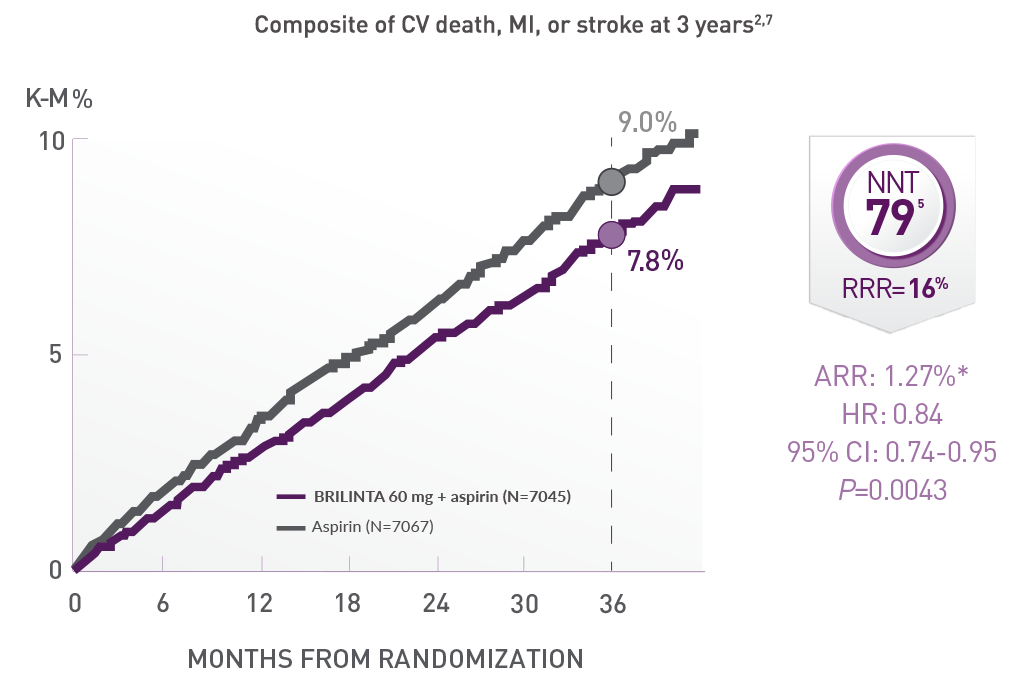
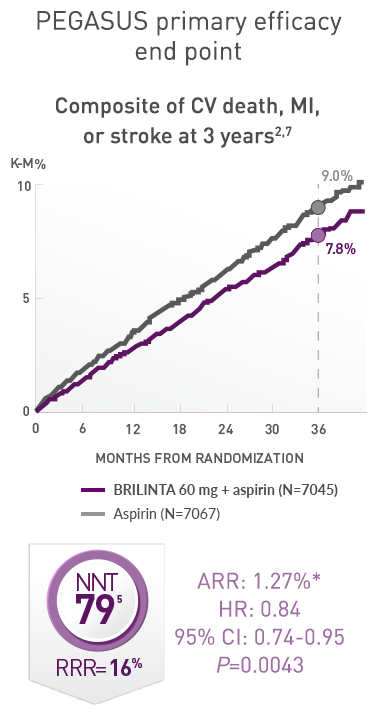
- Events per 1000 patient years for BRILINTA 60 mg plus aspirin vs aspirin: 26 vs 31, respectively
Patients were treated for at least 12 months and up to 48 months with a median follow-up time of 33 months2
- BRILINTA was studied in patients already on standard CV therapies in the PEGASUS trial7
*Due to rounding, the ARR is 1.27% and not 1.2%.
NNT=number needed to treat and is calculated as 1/ARR.
Do you have questions about the PEGASUS study?
EXPLORE MORE
PLATO STUDY DESIGN
PLATO was a randomized, international, double-blind, controlled comparative study in patients with ACS hospitalized with or without ST-segment elevation, with an onset of symptoms within 24 hours (N=18,624). The study compared BRILINTA (180-mg loading dose, 90 mg twice daily thereafter) to clopidogrel (300-mg to 600-mg loading dose, 75 mg daily thereafter) for the prevention of thrombotic CV events (CV death, MI, or stroke). Study period was 12 months, with median duration of therapy of 277 days. BRILINTA and clopidogrel were studied with aspirin and other standard therapies.2,3
SWEDEHEART REAL-WORLD REGISTRY
An observational real-world comparative effectiveness study evaluated 45,073 consecutive patients with acute MI, discharged on clopidogrel or ticagrelor, using data from the SWEDEHEART Registry between 2010 and 2013. The analysis was adjusted for patient age, sex, pre-existing comorbidities, ACS presentation characteristics, in-hospital course, and discharge medications. This was an observational registry trial and while analyses were adjusted for confounding factors, the results are subject to potential bias and should be interpreted with caution.6
PEGASUS STUDY DESIGN
PEGASUS-TIMI 54 compared BRILINTA (90 mg twice daily or 60 mg twice daily) vs placebo, each given with low-dose aspirin (75 to 150 mg), for the prevention of thrombotic CV events (CV death, MI, or stroke) in 21,162 patients ≥50 years of age with a history of MI (1 to 3 years prior to randomization). Patients also had at least 1 risk factor for thrombotic CV events (age ≥65 years, diabetes mellitus requiring medication, at least 1 other prior MI, evidence of multivessel coronary artery disease, or creatinine clearance <60 mL/min). Only the 60-mg dose strength is approved for use in patients with a history of MI 1 year after an ACS event. Patients were treated for at least 12 months and up to 48 months with a median follow-up time of 33 months.2,7
ACC=American College of Cardiology; ACS=acute coronary syndrome; AHA=American Heart Association; ARR=absolute risk reduction; CI=confidence interval; CKD=chronic kidney disease; CV=cardiovascular; HR=hazard ratio; K-M=Kaplan-Meier; MI=myocardial infarction; NNT=number needed to treat; NSTEMI=non–ST-elevation myocardial infarction; OAP=oral antiplatelet; PCI=percutaneous coronary intervention; PEGASUS=Prevention of Cardiovascular Events in Patients with Prior Heart Attack Using Ticagrelor Compared to Placebo on a Background of Aspirin; PLATO=PLATelet inhibition and patient Outcomes; RRR=relative risk reduction; STEMI=ST-elevation myocardial infarction; SWEDEHEART=Swedish Web-system for Enhancement and Development of Evidence-based Care in Heart Disease Evaluated According to Recommended Therapies; TIMI=Thrombolysis in Myocardial Infarction.
References
- Data on File, US-65430, AstraZeneca Pharmaceuticals LP.
- BRILINTA® (ticagrelor) [package insert]. Wilmington, DE: AstraZeneca Pharmaceuticals LP; 2024.
- Wallentin L, Becker RC, Budaj A, et al; PLATO Investigators. Ticagrelor versus clopidogrel in patients with acute coronary syndromes. N Engl J Med. 2009;361(11):1045-1057 and Supplementary Appendix.
- Data on File, REF-4911, AstraZeneca Pharmaceuticals LP.
- Data on File, REF-51076, AstraZeneca Pharmaceuticals LP.
- Sahlén A, Varenhorst C, Lagerqvist B, et al. Outcomes in patients treated with ticagrelor or clopidogrel after acute myocardial infarction: experiences from SWEDEHEART registry. Eur Heart J. 2016;37(44):3335-3342.
- Bonaca MP, Bhatt DL, Cohen M, et al; PEGASUS-TIMI 54 Steering Committee and Investigators. Long-term use of ticagrelor in patients with prior myocardial infarction. N Engl J Med. 2015;372(19):1791-1800.
BRILINTA WAS STUDIED IN PATIENTS ALREADY ON STANDARD CV THERAPIES IN THE PEGASUS TRIAL1
PEGASUS was designed to test the hypothesis that long-term therapy with BRILINTA added to low-dose aspirin reduces the risk of thrombotic CV events among patients with a history of MI.1
PEGASUS was a randomized, double-blind, placebo-controlled clinical trial. Patients underwent randomization at 1161 sites in 31 countries. The study compared BRILINTA (90 mg twice daily or 60 mg twice daily) vs placebo, each given with low-dose aspirin (75 mg to 150 mg), for the prevention of thrombotic CV events (CV death, MI, or stroke) in 21,162 patients ≥50 years of age with a history of MI (1 to 3 years prior to randomization). Patients also had at least 1 of the following risk factors for thrombotic CV events: age ≥65 years, diabetes mellitus requiring medication, at least 1 other prior MI, evidence of multivessel coronary artery disease, or creatinine clearance <60 mL/min. Patients were excluded if they required renal dialysis, had a previous intracranial hemorrhage, had gastrointestinal bleeding within 6 months, had a known bleeding diathesis or coagulation disorder, or required treatment with anticoagulants. Patients were treated for at least 12 months and up to 48 months with a median follow-up time of 33 months.1,2
- Both BRILINTA 60-mg and 90-mg dosages were studied as part of the PEGASUS trial. Only the 60-mg dose strength is approved for use in patients with a history of an MI 1 year after an ACS event
ACS=acute coronary syndrome; CV=cardiovascular; MI=myocardial infarction; PEGASUS=Prevention of Cardiovascular Events in Patients with Prior Heart Attack Using Ticagrelor Compared to Placebo on a Background of Aspirin.
References: 1. Bonaca MP, Bhatt DL, Cohen M, et al; PEGASUS-TIMI 54 Steering Committee and Investigators. Long-term use of ticagrelor in patients with prior myocardial infarction. N Engl J Med. 2015;372(19):1791-1800. 2. BRILINTA® (ticagrelor) [package insert]. Wilmington, DE: AstraZeneca Pharmaceuticals LP; 2024.
BRILINTA was studied in more than 18,000 patients with ACS in PLATO1,2
BRILINTA 90 mg plus aspirin was studied vs clopidogrel plus aspirin in more than 18,000 patients, including STEMI (ST-elevation myocardial infarction), NSTEMI (non–ST-elevation myocardial infarction), and UA (unstable angina) patients, across 43 countries and 862 sites in the PLATO (PLATelet inhibition and patient Outcomes) study.1
Patients were treated for at least 6 months and up to 12 months. Patients were excluded if they had a previous intracranial hemorrhage, had gastrointestinal bleeding within 6 months, had a known bleeding diathesis or coagulation disorder, or required treatment with anticoagulants. BRILINTA and clopidogrel were studied with aspirin and other standard therapies.2
PLATO was designed to mirror real-world clinical practice across ACS diagnoses and medical or invasive treatment approaches.3
PLATO included both medical and invasive (PCI or CABG) treatment approaches. Patients who received fibrinolytic therapy within the previous 24 hours or who had a need for chronic oral anticoagulation therapy were excluded.2
ACS=acute coronary syndrome; CABG=coronary artery bypass graft; PCI=percutaneous coronary intervention; PLATO=PLATelet inhibition and patient Outcomes.
References: 1. Wallentin L, Becker RC, Budaj A, et al; PLATO Investigators. Ticagrelor versus clopidogrel in patients with acute coronary syndromes. N Engl J Med. 2009;361(11):1045-1057 and Supplementary Appendix. 2. BRILINTA® (ticagrelor) [package insert]. Wilmington, DE: AstraZeneca Pharmaceuticals LP; 2024. 3. James S, Åkerblom A, Cannon CP, et al. Comparison of ticagrelor, the first reversible oral P2Y12 receptor antagonist, with clopidogrel in patients with acute coronary syndromes: rationale, design, and baseline characteristics of the PLATelet inhibition and patient Outcomes (PLATO) trial. Am Heart J. 2009;157(4):599-605.